A clear starting point.
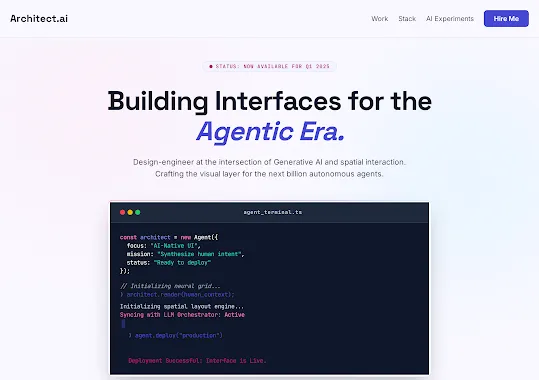
The brief was to turn a set of Stitch designs into a portfolio that shows both AI fluency and the judgment behind the work. I chose Cloudflare to host it.
The designs set the first look: light surfaces, generous space, technical type, and a restrained spectrum of color. The next step was to make the navigation, page structure, and contact flow actually work.
Human direction. AI assistance.
I set the direction and chose the design. Stitch produced the visual prototypes, and Codex helped turn them into a working application, propose technical choices, and check behavior.
The build used parallel agents for focused tasks such as preparing images and implementing the contact backend. Their work came together in one shared codebase for integration and review.
Making it mine.
The first version worked, but it looked like what it was: an AI's first draft. It had made-up "Architect.ai" branding, a fake code terminal, and claims I couldn't stand behind.
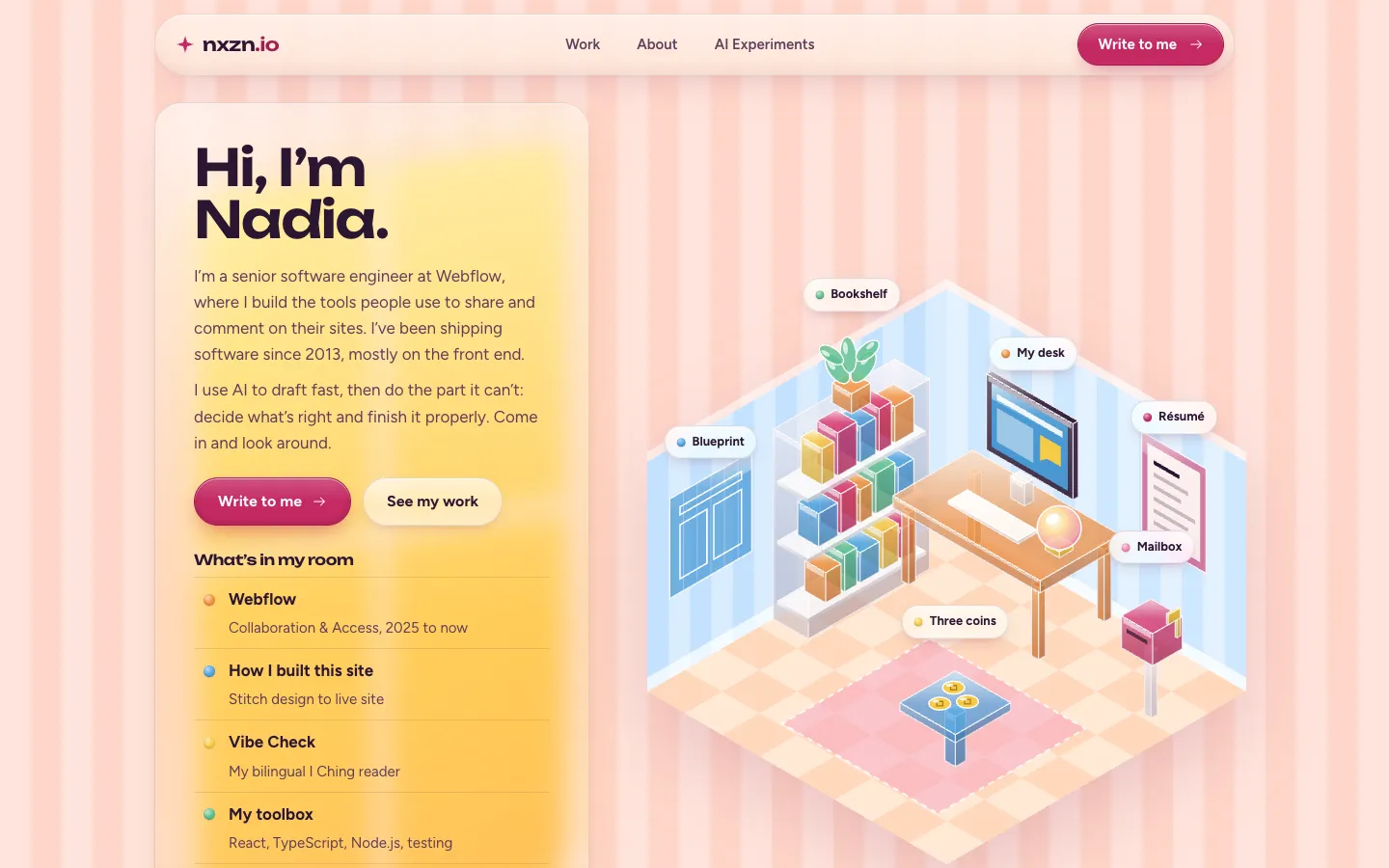
So I redesigned it with Claude Code and the Impeccable design skill. I picked a direction from a set of options, a warm striped room finished in liquid glass, then steered every page: the colors, the glass, and every white edge I kept sending back. I replaced the placeholder projects with real work and rewrote the copy in my own voice.
The choices that shape it.
Generate the content pages.
Astro generates the portfolio as HTML. Most of what a visitor needs is content, so browser scripts are kept for interactions such as the contact form.
Keep the backend focused.
A Cloudflare Worker handles contact submissions: validation, spam checks, rate limiting, and email delivery. The inbox is the first version's record of inquiries.
Make feedback mean something.
The original form showed success after a timer. The rebuilt form waits for a real acceptance from the email service and keeps the message when a request fails.
Only show what's real.
The first version had placeholder projects so the structure could come first. In the redesign I removed them; real case studies join when they're written.
Glass stays clear.
Tinted glass on the pink wall turned every page into one pink blob. The glass went back to clear, edged with a faint plum line instead of a white one, and the color lives in the dots.
Still a work in progress.
Next up: connect email delivery, publish on Cloudflare, and add real project case studies. This one will grow with the site, including what testing turns up and what changes along the way.