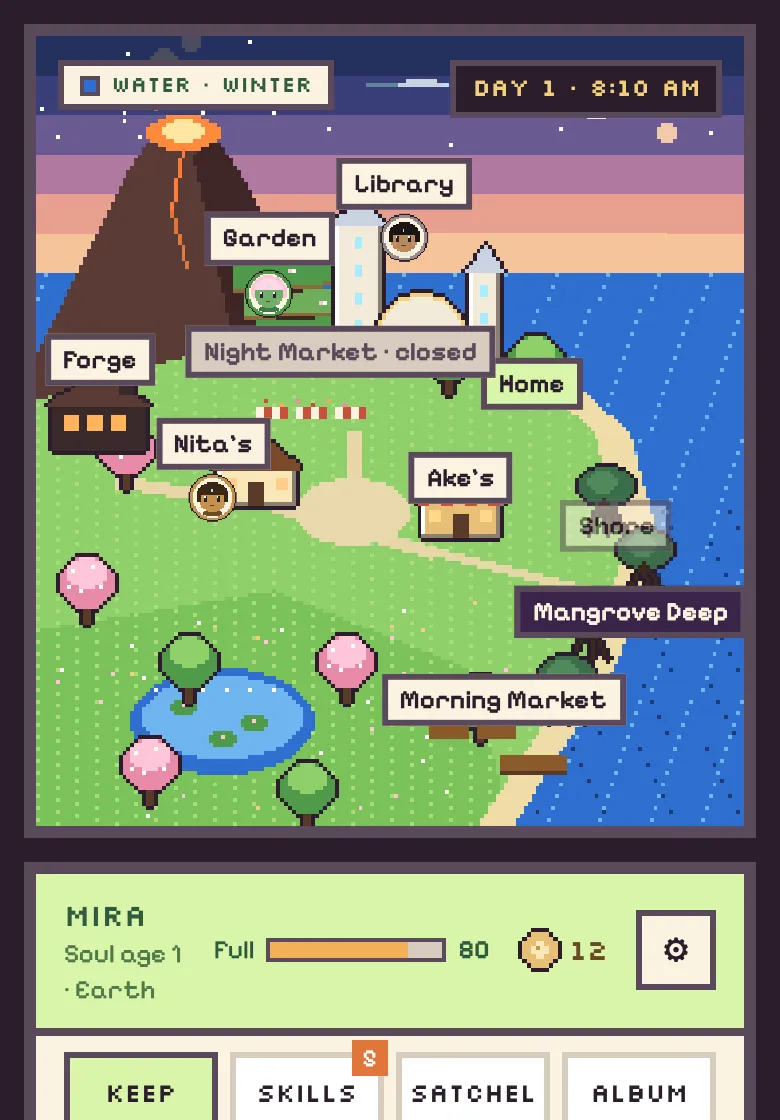
The prototype worked. It wasn't fun.
I started with a single HTML file: souls, five elements, a cast with daily routines, markets, jobs, skill trees. All of it worked, and none of it felt good to play. Every action was a button in a menu.
So I didn't wrap the old file. The rebuild started from the part you touch: a window box with three pots, where you hold to pour water and come back tomorrow to see what grew. Combat, the town and everything else came back around that.
I set the rules. Claude made the defaults.
I worked with Claude Code in sessions on my laptop and in the cloud, so each session needed to pick up where the last one stopped. A brief at the top of the repo holds my non-negotiables and the code layout, a design log records every decision, and a parity checklist tracks what's left from the prototype.
I asked for a low-decision workflow: Claude proposes a sensible default, says what it picked, and only asks me when a choice is expensive to undo. That kept me on the parts only I can judge, like whether a line sounds like the character, or whether a fight is fun.
Every change goes through a pull request and one check: type-check and build, 134 unit tests on the game rules, and 23 click-through tests on a phone and a landscape screen, offline included.
Built for the phone in my hand.
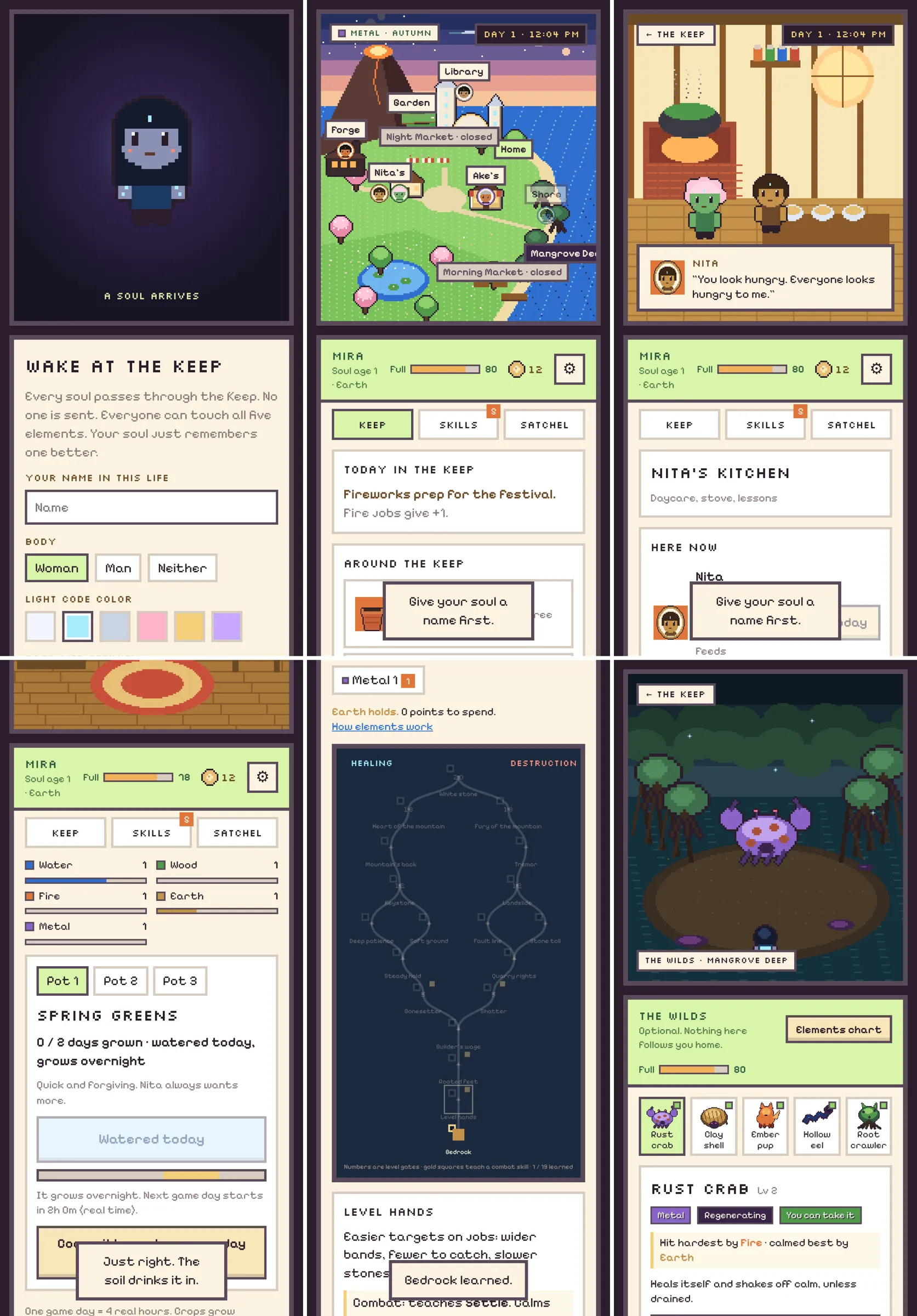
I playtested on my phone and sent feedback as I went. Some of it changed the rules: "why would you breathe mid-fight" replaced a breathing move with a heal skill for each element. My first playtest made levels too quick, so the climb got longer without costing anyone their progress.
Most of it was layout. The bottom menu went through seven pull requests in one day until the picture stayed put, one section opened at a time, and nothing needed scrolling. Each round shipped as screenshots I could check on the phone.
The art had to change.
The first art was drawn in code: a Python script placing pixels, with a style guide for palette and outlines. It was enough to play with and not much more. Faces were the weakest part, and it showed every time I opened the game.
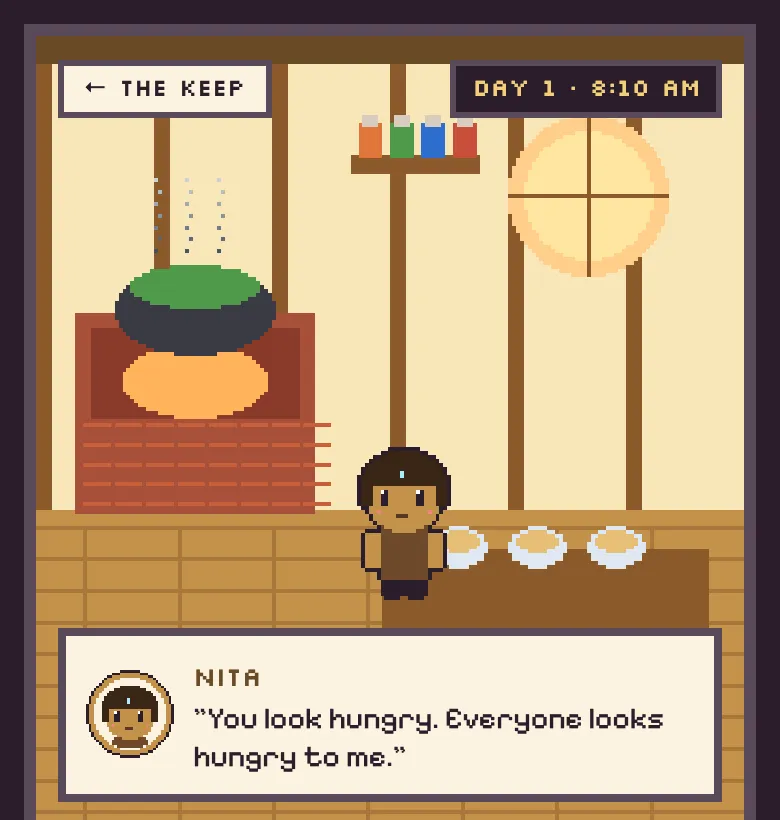
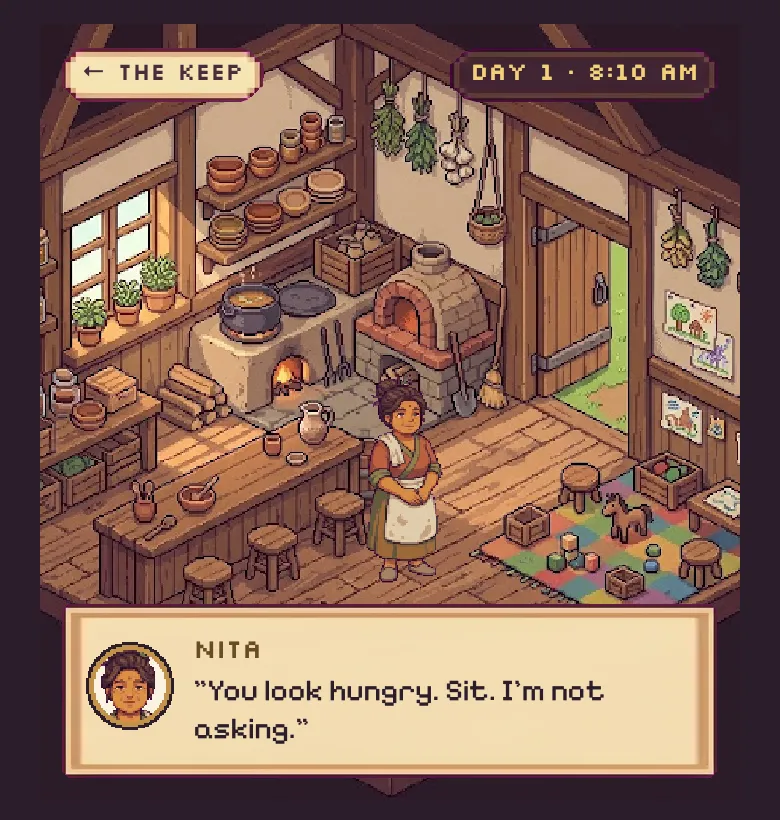
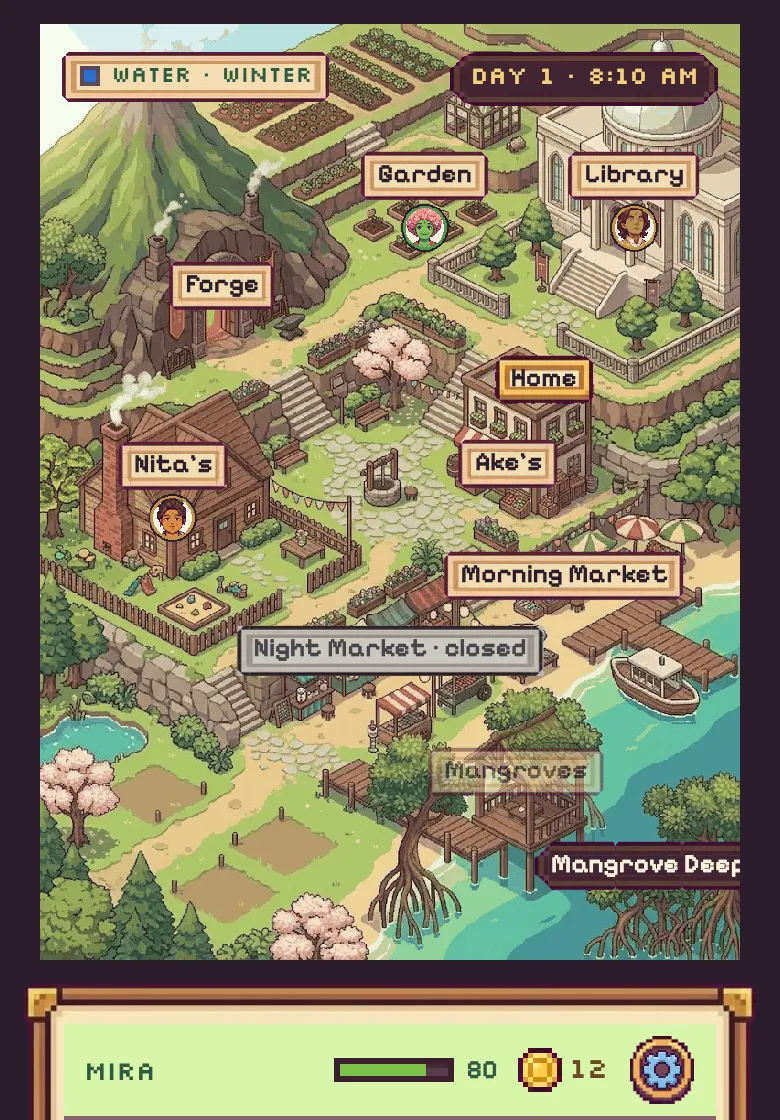
For the second pass I drew sheets in Gemini on a magenta background. Claude snapped each sheet to its pixel grid, sliced out the pieces and wired them in: the interface kit, hundreds of icons, the scenes and the cast. When a character didn't look like who they are, I said so and it was redrawn from the character notes.
The rules I set.
Never force sleep.
Most farming games send you to bed. Here your only limit is how full you are, and time away counts as rest: come back after a few hours and you're fed again.
No fishing.
I hate fishing minigames, so the collecting game is catching wisps: drifting lights at night. You hold to stay in sync with a wisp's flicker, and every catch lights up your room.
Mark cheating, don't block it.
Saves live on the phone, so anyone determined can edit one. Solo play is the player's business: an edited save still loads, it's just quietly marked. Real checks wait for the server.
Never crop the art.
Early phone layouts zoomed and cropped square scenes to fill the screen. Phones have spare height, so new scenes are drawn taller and always shown whole.
Money buys looks, never power.
If the game ever sells anything, it will be outfits, furniture styles and seasonal frames. No XP, no currency, no shortcuts.
Still growing.
The prototype is fully ported, and cooking and gardening now have their own skill tracks. Next: sign-in so a save can follow you between devices, music, and more dialogue, which is still the thinnest part of the game.